
.png?20260825062215954+1000)
Commercial Building Design Melbourne: Creating Functional, Future-Ready Spaces
Commercial buildings have evolved significantly over the past decade. Today's businesses require spaces that do more than provide shelter - they need environments that support productivity, attract customers, improve sustainability and adapt to changing operational needs.
From office developments and retail premises to healthcare facilities and mixed-use projects, commercial building design plays a crucial role in determining how a building performs over its lifespan. In Melbourne's competitive property market, thoughtful design can create long-term value while helping businesses achieve their operational goals.
Why Commercial Building Design Matters
A well-designed commercial building can influence every aspect of a business operation. Beyond aesthetics, design impacts efficiency, customer experience, employee wellbeing and long-term maintenance costs.
Effective commercial design can help:
- Improve workplace functionality
- Enhance customer and visitor experiences
- Increase property value
- Support sustainability goals
- Reduce operating costs
- Improve accessibility and compliance
- Create flexibility for future growth
As Melbourne continues to grow and diversify, commercial developments must respond to changing expectations around technology, sustainability and user experience.
Key Principles of Successful Commercial Building Design
1. Prioritising Functionality
Every successful commercial project begins with a clear understanding of how the building will be used.
Design considerations typically include:
- Staff workflows
- Customer movement patterns
- Equipment requirements
- Storage needs
- Accessibility requirements
- Future operational changes
A building should support business activities efficiently while remaining practical for daily use.
2. Designing for Flexibility
Commercial requirements can change over time. Flexible spaces allow businesses to adapt without requiring extensive renovations.
Common strategies include:
- Open-plan layouts
- Modular workspaces
- Multi-purpose meeting areas
- Adaptable retail configurations
- Flexible tenancy arrangements
Future-proofing a building can help reduce long-term costs while extending the usefulness of the space.
3. Sustainability and Environmental Performance
Sustainability is now a major consideration in commercial building projects across Melbourne.
Modern commercial developments often incorporate:
- Passive solar design
- Natural ventilation
- Energy-efficient lighting
- High-performance glazing
- Water-saving initiatives
- Sustainable building materials
These strategies can improve occupant comfort while reducing environmental impacts and operating expenses.
Businesses planning a new development can benefit from understanding the broader professional building design process, from initial feasibility assessments through to approvals and construction documentation.
Emerging Commercial Building Design Trends
1. Smart Building Technology
Technology is becoming increasingly integrated into commercial environments.
Smart building features may include:
- Automated lighting systems
- Intelligent climate control
- Building management systems
- Occupancy monitoring
- Security integration
- Energy consumption tracking
These technologies can improve efficiency while providing valuable operational insights.
2. Wellness-Focused Workspaces
Employee wellbeing has become an important consideration in workplace design.
Modern commercial spaces often incorporate:
- Increased natural daylight
- Improved air quality
- Acoustic treatments
- Collaborative spaces
- Access to outdoor areas
- Biophilic design elements
Creating healthier environments can support productivity, comfort and employee satisfaction.
3. Mixed-Use Development Growth
Mixed-use developments continue to gain popularity throughout Melbourne.
These projects may combine:
- Commercial offices
- Retail spaces
- Residential apartments
- Hospitality venues
- Community facilities
The integration of multiple uses can create vibrant, active precincts that maximise site potential.
4. Sustainable Urban Design
Modern commercial developments increasingly focus on how buildings contribute to the surrounding community.
Design considerations may include:
- Streetscape activation
- Walkability
- Public realm improvements
- Green infrastructure
- Public transport accessibility
- Community connectivity
Well-integrated developments contribute positively to both businesses and local neighbourhoods.
Types of Commercial Buildings
1. Office Buildings
Office environments must balance collaboration, productivity and flexibility.
Important considerations include:
- Workspace planning
- Meeting facilities
- Staff amenities
- Technology infrastructure
- Acoustic performance
- Natural lighting
2. Retail Spaces
Retail design focuses heavily on customer experience and operational efficiency.
Successful retail projects often consider:
- Customer circulation
- Product visibility
- Storefront presentation
- Accessibility
- Storage requirements
- Future adaptability
3. Healthcare and Specialist Facilities
Medical and health-related projects require specialised planning and compliance considerations.
These developments commonly involve:
- Patient flow management
- Privacy requirements
- Accessibility compliance
- Specialist equipment integration
- Waiting areas
- Clinical support spaces
4. Mixed-Use Developments
Mixed-use projects require careful coordination between different building functions while ensuring each component operates efficiently and independently where required.
The Commercial Building Design Process
1. Site Analysis and Feasibility
The first stage involves assessing:
- Site dimensions
- Planning controls
- Access requirements
- Environmental constraints
- Development opportunities
A detailed feasibility assessment helps establish realistic project outcomes from the outset.
2. Concept Design
Concept design transforms project objectives into an initial building solution.
This stage may include:
- Floor plans
- Space planning
- Building massing
- Preliminary design concepts
- Site integration strategies
3. Planning and Permit Documentation
Many commercial developments require planning and building approvals before construction can begin.
This process may involve:
- Planning permit applications
- Building permit documentation
- Consultant coordination
- Council liaison
- Compliance reviews
4. Construction Documentation
Detailed drawings provide contractors and consultants with the information required to build the project accurately and efficiently.
Designing for Challenging Sites
Not all commercial projects are located on large, straightforward sites.
Melbourne developments often involve:
- Narrow allotments
- Corner sites
- Infill developments
- Irregular land shapes
- Urban constraints
Many of the same design principles used when maximising design outcomes on constrained sites can also be applied to commercial developments where efficient space planning is essential.
Balancing Aesthetics and Performance
Commercial buildings must achieve both visual appeal and practical functionality.
Successful projects balance:
- Architectural character
- Operational requirements
- User experience
- Construction efficiency
- Budget objectives
- Long-term maintenance considerations
Good design creates buildings that are attractive, practical and durable.
Sustainability in Melbourne Commercial Development
Environmental performance is becoming increasingly important within the commercial property sector.
Modern developments often focus on:
- Energy efficiency
- Thermal performance
- Sustainable material selection
- Reduced carbon emissions
- Water conservation
- Building resilience
Integrating sustainability early in the design process can lead to better outcomes than attempting to retrofit environmental features later.
Choosing a Commercial Building Designer
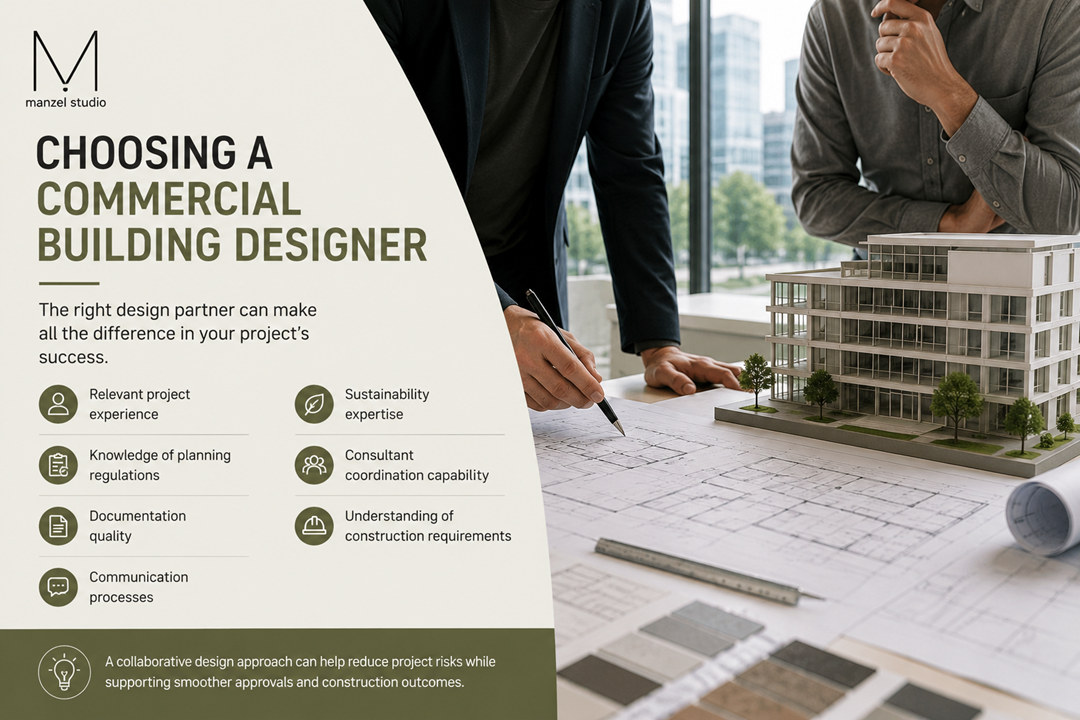
Selecting the right commercial building designer is an important step in any commercial project.
Consider factors such as:
- Relevant project experience
- Knowledge of planning regulations
- Documentation quality
- Communication processes
- Sustainability expertise
- Consultant coordination capabilities
- Understanding of construction requirements
A collaborative design approach can help reduce project risks while supporting smoother approvals and construction outcomes.
Conclusion
Commercial building design continues to evolve as businesses seek spaces that are more sustainable, adaptable and user-focused. Whether developing an office building, retail premises, healthcare facility or mixed-use project, thoughtful design can significantly influence long-term performance and value.
By prioritising functionality, sustainability and future flexibility, commercial developments can better serve businesses, occupants and the wider community.
For developers, investors and business owners, engaging experienced building design professionals early in the process can help unlock site potential while creating practical and future-ready commercial environments.
FAQs
What is commercial building design?
Commercial building design involves planning and documenting buildings used for business purposes, including offices, retail stores, healthcare facilities, hospitality venues and mixed-use developments.
Why is sustainable commercial building design important?
Sustainable design can improve energy efficiency, reduce operating costs, enhance occupant comfort and support environmental performance over the life of a building.
What should I look for in a commercial building designer?
Look for experience with similar projects, strong documentation capabilities, knowledge of local planning requirements, effective communication and an understanding of sustainable design principles.